
Getting Bottom Surgery: Youtuber, Mathilda Hogberg's Full Experience
This article is general information only and is not medical advice. Experiences vary from person to person, and decisions about hormones or surgery are personal. Talk to a qualified clinician about your own situation.
Popular transgender YouTuber Mathilda Hogberg recently shared her candid experience undergoing bottom surgery. This major operation also referred to as gender confirmation surgery or SRS, is part of transitioning for many transgender people. Hogberg provided an intimate look at the entire process, from consultations to recovery.
Let's explore more about Getting Bottom Surgery, following the Mathilda Hogberg's full experience.
Deciding on Surgery
Hogberg had long dreamed of getting bottom surgery. She describes Sweden's system as matching patients with surgeons and facilitating the process. Hogberg liked the surgeon she was paired with and decided to move forward.
At the consult, they discussed the risks, like bleeding and infections. Though concerned, Hogberg was eager and wanted the surgery as soon as possible.
Preparations
Some patients require hair removal prior to surgery. Fortunately, Hogberg uses an at-home IPL hair removal device from KetchBeauty. Afterward, Hogberg scheduled her surgery just a few months after the consultation.
Intense Pulsed Light (IPL) handset offers an at-home method for hair removal that may reduce growth over time for some people, with results varying.
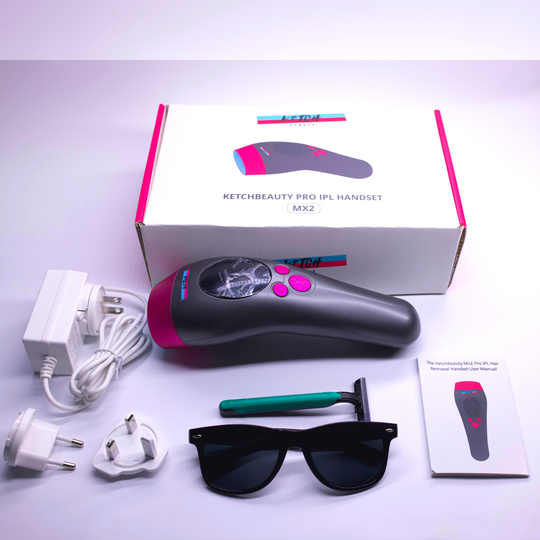
Here's a breakdown of what IPL is, how it works, and specific information on using the KetchBeauty range of IPL handsets:
Understanding IPL:
- What is IPL? IPL uses broad-spectrum light that targets the melanin in hair. This light then converts to heat, damaging the hair follicle, which reduces hair growth over time.
- Long-Term Solution: IPL isn't a one-time solution. It requires multiple sessions but offers a significant long-term reduction in hair growth.
KetchBeauty’s IPL Range:
- OG IPL Handset: The OG is KetchBeauty’s original device. It offers an ergonomic design suitable for first-time users. This handset can be used on many body parts, including the face and bikini, when used as directed and after a patch test.
- V4.1 IPL Handset: The V4.1 is described as offering faster treatment than the OG, with changes often taking several treatments, results varying. It also has an improved ergonomic design and can be used on many skin tones but not the darkest, check the device guide.
- MX2 Pro IPL Handset: The MX2 is a newer model in the range, designed for quicker sessions. It has five energy levels to cater to different hair types and densities.
Effortless and Long-lasting full-body hair reduction/removal at home with the KetchBeauty MX2 IPL Hair Removal Handset
Reduce unwanted face and body hair over time and enjoy softer, smoother-looking skin in the comfort of your home with the Mx2 Pro IPL hair removal handset.
- User-friendly design
- ⭐Digital interface (new*)
- ⭐999,999 pulses (new*)
- ⭐Usage tracking (new*)
- ⭐8 intensity levels (new*)
- ⭐Ice cold mode (new*)
- Automatic flash mode
- ⭐Lifetime warranty (new*)
- ⭐6 months money back (new*)
- Suitable for full-body use
- ⭐For many skin tones, check the device guide (new*)
The Mx2 IPL handset is most effective on black and dark brown hair and is unsuitable for removing red, white, grey, or blonde hair.
Say goodbye to unwanted hair with confidence and enjoy the convenience of long-lasting results.
Choose KetchBeauty and transform your hair removal routine today!
User Manual

Using KetchBeauty’s IPL Handsets:
- Preparation: Shave the area you're going to treat. This ensures the IPL energy is focused on the hair root and not wasted on the hair above the skin.
- Choose the Right Energy Level: Start with the lowest energy setting for first-time users and work your way up as your comfort allows. The MX2's varying energy levels offer flexibility for different hair types.
- Consistent Sessions: Use the device once a week for the first 12 weeks for optimal results. After this initial phase, use it once every month for the next three months or until you achieve your desired result.
- Post-IPL Care: Avoid exposure to the sun after treatment, as the skin will be sensitive. Use sunscreen if you're going out.
Safety and Side Effects:
- Test Patch: Always do a test patch 24 hours before complete treatment to ensure no adverse reaction.
- Avoid use on Tattoos: Do not use IPL directly over tattoos, as it can cause skin burns.
- Side Effects: Some might experience slight redness post-treatment, which usually subsides within a few hours.
Conclusion:
IPL, especially with the advanced features and effectiveness of the KetchBeauty handsets, offers a promising long-term solution for those looking to reduce hair growth.
Following the guidelines, maintaining consistency, and prioritizing safety is essential to achieve the best results.
Please note that for a more detailed and personalized guide, one should refer to the user manual of each KetchBeauty product and consult with professionals if unsure about IPL treatments.
Surgery Day
On the morning of surgery, Hogberg felt excited but also nervous about the risks. Her mother accompanied her to the hospital.
One medication given before anesthesia numbs the lower body - Hogberg's legs were paralyzed and she couldn't move her toes when prompted. This shot wears off after the 6-8 hour surgery.
Hogberg remembered nothing after falling asleep. Upon waking in the recovery room, she rated her pain around a 6-8 out of 10, which the nurse said was less than most. After the initial monitoring, Hogberg was moved to a regular hospital room.
Hospital Recovery
The first days after surgery were the hardest, according to Hogberg. She had trouble sleeping with the urinary catheter in place. Walking was extremely painful, though encouraged to improve circulation. Dilating also began, which involves inserting a device into the vaginal opening to prevent it from closing.
Bandage removal can be agonizing if adhesion occurs. Hogberg said her surgical drain was stuck to internal tissue. The surgeon had to pull hard, causing intense pain and crying. Due to dosage limits, they could not give more pain medication.
Being bedridden led to an embarrassing moment when a nurse forgot about Hogberg, leaving her lying in blood and waste for a prolonged period. After about one week, she was discharged home.
At-Home Recovery
The first few months came with activity restrictions - no work, exercise, or using stairs. Hogberg had to dilate multiple times daily. IPL hair removal devices like KetchBeauty could be used at home while recovering.
Swelling, pain, and odd sensations persisted for many months. Fevers sometimes occur as the body is healed. It took Hogberg about one full year before she felt mostly recovered from the intense surgery and aftercare.
Results
Despite a difficult recovery at times, Hogberg expressed great satisfaction with her surgical results. She shared her story to help others considering gender confirmation surgery understand the full scope of the process. For Hogberg, the long haul was worthwhile to align her outer appearance with her inner self.
The Journey to Vaginoplasty Surgery
Vaginoplasty surgery is a complex process that transgender women undergo to transition to female anatomy, and for those contemplating this permanent change, it is a deeply personal decision that requires extensive research and thoughtful consideration. Transitioning is a long, methodical, step-by-step process, whether someone decides to take hormones, get breast augmentation, undergo facial feminization surgery, or undergo body contouring, and each decision should be thoughtfully considered for its outcomes. For many, the decision to undergo vaginoplasty takes time: it is not something people just wake up one day and decide on a whim. There is a lot of research and contemplation involved, and that slow, deliberate pace is part of making a decision you can live with.
MTF Bottom Surgery: Preparing for SRS
SRS, sexual reassignment surgery, gender confirmation surgery, and bottom surgery are various names for the same procedure, and for many trans women it is a crucial step, though not in all cases. The healing period after bottom surgery is long and arduous, so it is crucial to be properly prepared before this big step. Hair removal is something that is not addressed often, yet surgeons may require some laser removal and electrolysis before you are ready for surgery, and they will specify the areas where hair must be removed. An at-home IPL system may make that preparation process easier and less expensive for some people than clinic visits alone, and it pairs with the hair-removal requirements your surgeon sets. Environment matters too: after surgery, doctors recommend bed rest for several weeks, so preparing a comfortable recovery space, with help arranged in advance, is part of preparing for SRS, not an afterthought. This is general information, not medical advice.